Origin:
Tabriz carpets come from the historic city of Tabriz in northwestern Iran, one of the oldest carpet-weaving centers in the world. This region has been a hub of Persian art and craftsmanship since the Safavid dynasty.
Cultural Background:
Tabriz carpets are known for their classical elegance and have been woven for centuries by master artisans. These carpets often reflect Persian poetry, gardens, and architectural motifs, making them a symbol of refined culture and sophistication.
How It’s Made:
Each Tabriz carpet is hand-knotted by skilled weavers, often using a tight Turkish knot. The weave is incredibly fine, allowing for complex patterns and detailed imagery. Tabriz carpets are typically made with a wool pile and a cotton or silk foundation.
Time to Weave:
Due to their detailed and dense knotting—often exceeding 400 knots per square inch—a medium-sized Tabriz carpet can take anywhere from 6 months to over a year to complete.
Unique Traits:
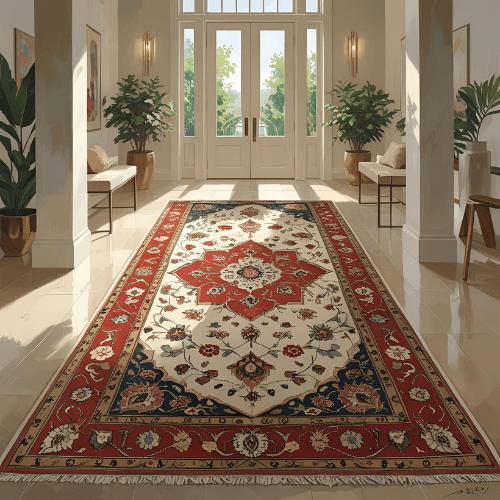
Central medallion designs
Fine curvilinear patterns
High knot density and precision
Often features silk highlights and an earthy color palette
Why Choose Tabriz:
A Tabriz carpet is not only a functional piece but a work of art. It adds a timeless elegance to any space and is often passed down as a family heirloom due to its lasting quality and cultural value.