Origin & Heritage
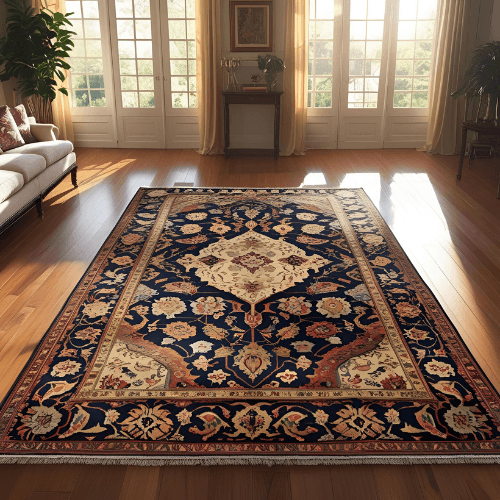
Kerman carpets are woven in the city of Kerman in southeastern Iran—an area with a carpet-weaving legacy dating back to the 15th century. Known for producing some of the finest and most luxurious Persian rugs, Kerman became a major exporter during the Safavid era.
Artisanal Craftsmanship
Kerman rugs are hand-knotted using high-grade wool, often on a cotton foundation. The weaving technique allows for highly detailed, intricate designs using the Persian (asymmetrical) knot, with impressive knot densities.
Design Traits
Graceful floral motifs, curvilinear vines, and central medallions dominate Kerman designs. You’ll often see soft, elegant colour palettes—ivory, rose, light blue, and beige—creating a sophisticated and classic look.
Time to Weave
Because of their fine knotting and elaborate patterns, Kerman carpets can take several months to over a year to complete, especially for larger pieces with high knot counts.
Cultural Symbolism
Many Kerman rugs include vases, peacocks, and floral bouquets symbolizing beauty, abundance, and eternity. Some include poetic inscriptions or garden-inspired layouts reflecting paradise motifs.
Durability & Use
These are heirloom-quality carpets known for their softness and lasting beauty. Ideal for formal living rooms or elegant bedrooms, Kerman rugs add refinement and a touch of regal history to any space.
Check your space and choose a rug size that fits. Standard options: 4×3m, 3.5×2.5m, 3×2m.
Open our catalogue to filter by size, colour, price, or design — or click a product heading to view full details and enquire.
Click 'Enquire' on any listing and fill in your contact details. We'll assist you directly.
View in Randburg by appointment, even on Sundays. Nationwide courier available.
Browse our curated collection of new and gently used Persian carpets, meticulously selected to meet the discerning tastes of our clientele.
info@persiancarpetsonline.co.za
Malanshof , Randburg , Johannesburg , South Africa
Copyright © 2026, Persian Carpets Online , All Right Reserved, Designed by Sugarbird Digital Marketing