
Choosing an authentic Persian carpet can feel overwhelming—especially with so many imitations on the market. If you’re wondering how to identify an authentic Persian carpet, you’re not alone. This guide will walk you through the key signs that separate hand-knotted treasures from machine-made replicas.
Authentic Persian carpets are entirely hand-knotted, crafted knot by knot by skilled artisans. These rugs are made using traditional techniques passed down for generations in Iran and other historic weaving regions. As a result, each rug tells a story—woven in time, effort, and cultural heritage.
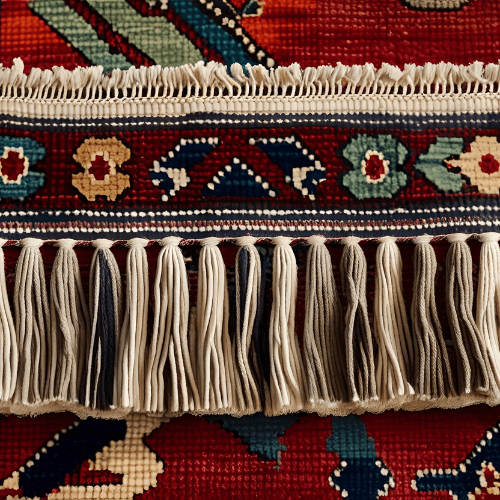
Fringe is a good starting point. In genuine Persian carpets, the fringe is part of the rug’s foundation, not sewn on afterward. The back of the rug offers more clues: hand-knotted rugs display uneven, individually tied knots, while machine-made versions show uniform, grid-like stitching.
Additionally, machine-made rugs often use synthetic materials, while authentic Persian rugs are woven with wool, cotton, or silk. Because of the craftsmanship involved, hand-knotted rugs can last 50+ years. In contrast, machine-made options typically last just 5–10 years.
| Feature | Hand-knotted Carpet | Machine-Made Carpet |
|---|---|---|
| Back of rug | Uneven, detailed knots visible | Perfectly uniform or grid-like texture |
| Fringe | Extension of the foundation | Sewn or glued on after weaving |
| Price | Higher due to labour and uniqueness | Lower due to mass production |
| Material | Natural fibres (wool, silk, cotton) | Often synthetic blends |
| Lifespan | 50+ years with care | 5–10 years on average |
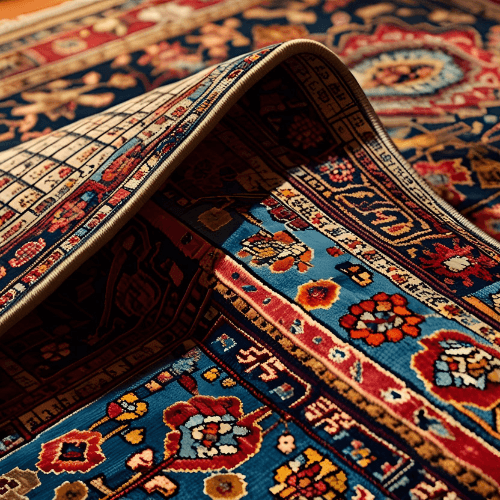
Flip the rug over and look closely. Hand-knotted carpets show variations in knot placement, slightly imperfect symmetry, and a design that mirrors the front. Machine-made rugs tend to have a rigid, mechanical pattern underneath, with little to no variation.
Common Mistakes to Avoid
Don’t assume a soft rug is authentic—modern machines can mimic texture.
Watch for labels like “hand-tufted” or “power-loomed”—these are not hand-knotted.
Extremely low prices are often a red flag. If a deal seems too good to be true, it usually is.
🗸 Fringe is woven in, not sewn on
🗸 Back shows uneven, hand-tied knots
🗸 Made from natural fibers (wool, cotton, or silk)
🗸 Origin is Iran or a traditional weaving region
Reputable dealers will always be transparent about the origin and construction of their rugs. Ask about the knot count, materials, and where the rug was made. By understanding how to identify an authentic Persian carpet, you’ll make a confident, lasting investment.
Check your space and choose a rug size that fits. Standard options: 4×3m, 3.5×2.5m, 3×2m.
Open our catalogue to filter by size, colour, price, or design — or click a product heading to view full details and enquire.
Click 'Enquire' on any listing and fill in your contact details. We'll assist you directly.
View in Randburg by appointment, even on Sundays. Nationwide courier available.
Browse our curated collection of new and gently used Persian carpets, meticulously selected to meet the discerning tastes of our clientele.
info@persiancarpetsonline.co.za
Malanshof , Randburg , Johannesburg , South Africa
Copyright © 2026, Persian Carpets Online , All Right Reserved, Designed by Sugarbird Digital Marketing