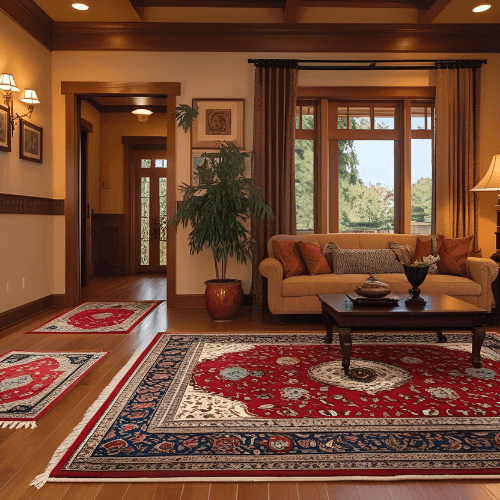
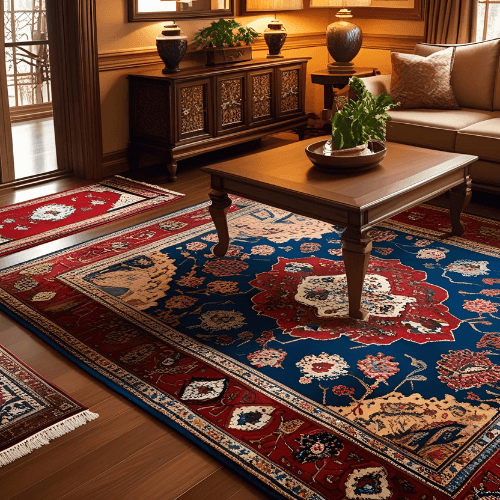
If you’re shopping for a handmade rug, understanding the sizes of authentic hand-knotted Persian carpets is essential. Persian rugs come in a variety of standard and traditional dimensions—each one suited to a different room or purpose. In this guide, we break down the most popular Persian carpet sizes and where they work best in your home.
Size doesn’t only affect coverage—it impacts price, design, and practicality. For example, a small 60×90cm (2×3ft) rug may be ideal for entryways, while a 3×4m (10×13ft) carpet transforms a living room into a statement space. Larger rugs also allow for more detailed patterns and higher knot counts.
| Size Name | Approx. Dimensions (cm) | Best Placement |
|---|---|---|
| Poshti | 60 × 90 | Entryways, small bedside rugs |
| Dozar | 130 × 200 | Bedrooms, studies, sitting areas |
| Ghalicheh | 200 × 300 | Dining rooms, lounges |
| Kelleghi | 80 × 250 or 100 × 300 | Hallways, kitchen runners |
| Ghali (Large) | 300 × 400 or more | Formal living rooms, open spaces |
Before buying, measure your room and decide how much floor should remain visible around the rug. Typically, 20–30cm (8–12 inches) of exposed flooring creates a balanced look. Additionally, consider door clearance and furniture placement—especially with thicker, tightly knotted rugs.
Yes—but not just because of size. Larger hand-knotted Persian carpets require more time, materials, and knot precision. Because of this, they often feature more intricate designs and richer symbolism. As a result, they become heirloom pieces.
Match the rug size to the function of the space
Always Measure first-don't estimate
Ask your seller if the size is traditional or custom
Keep balance with your furniture layout
Hall runners should extend 10-15xm from each wall edge